


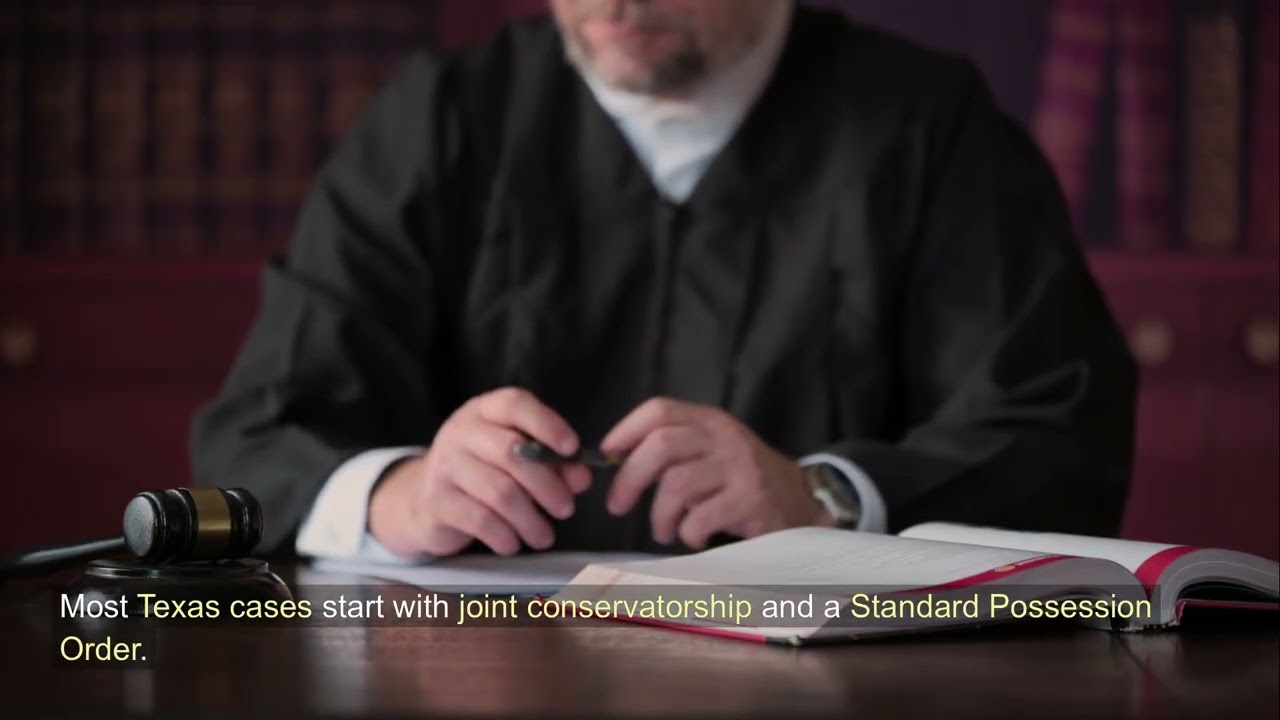
Child custody decisions are legal determinations made by a court that establish where a child lives, who makes major decisions for them, and how much time each parent spends with them. These rulings shape daily family life for years and carry real emotional weight for everyone involved.
This guide focuses specifically on how Texas family courts evaluate custody arrangements, what factors influence parenting time schedules, and what parents in Fort Bend County and Harris County can expect from the process.
Child Custody Definition: Child custody is a court-ordered legal arrangement that determines parental rights and responsibilities for a minor child, including where the child resides and who holds authority to make decisions about their health, education, and welfare.
According to the Texas Attorney General’s office, Texas courts do not automatically favor either parent. The guiding standard in every child custody case is the best interest of the child. That phrase gets used a lot, but what does it actually mean in practice?

What “Best Interest of the Child” Really Means in Texas
Texas Family Code Section 153.002 establishes that the best interest of the child is the primary consideration in all custody and visitation decisions. Courts look at a combination of emotional, physical, and practical factors when applying this standard.
Physical safety and stability: Courts assess whether each parent can provide a safe, stable home environment.
Emotional and developmental needs: A child’s age, temperament, and existing attachments to each parent carry significant weight.
Parental ability and willingness: Judges consider each parent’s ability to meet the child’s day-to-day needs and their willingness to support the child’s relationship with the other parent.
History of family violence: Any credible history of abuse, neglect, or domestic violence directly impacts custody outcomes. Texas courts take this seriously.
Child’s preference: In Texas, a child age 12 or older may be interviewed by the court about their preference regarding conservatorship, but the judge is not bound by the child’s preference.
The Two Types of Child Custody Courts Decide
Texas law distinguishes between two separate aspects of custody, and many parents confuse them.
Conservatorship (Legal Custody): This determines who makes major decisions about the child’s life, including medical care, education, and religious upbringing. Texas courts most often award Joint Managing Conservatorship, which means both parents share decision-making rights, even when physical custody is unequal.
Possession and Access (Physical Custody): This covers where the child physically lives and the actual parenting time schedule. One parent is typically named the primary conservator, and the other follows a structured visitation schedule.
| Custody Type | What It Covers | Texas Default | Can Parents Modify? |
|---|---|---|---|
| Joint Managing Conservatorship | Decision-making rights | Yes, presumed | Yes, by agreement |
| Sole Managing Conservatorship | Full decision-making control | Only if justified | Yes, with court approval |
| Standard Possession Order | Parenting time schedule | Common baseline | Yes, by agreement or motion |
| Expanded Standard Possession | More time for non-primary parent | Available by request | Yes |
Parenting Time and the Standard Possession Order
Texas courts frequently use the Standard Possession Order (SPO) as a baseline for parenting time schedules. Under the SPO, the non-primary parent typically has possession on the first, third, and fifth weekends of the month, Thursday evenings during the school year, alternating holidays, and extended time in summer.
Parents who live more than 100 miles apart follow a different version of the SPO, with longer holiday periods and extended summer possession replacing the regular weekend schedule.
Courts can deviate from the SPO when parents agree to a different arrangement or when evidence shows the SPO does not serve the child’s best interest. Custom schedules are common for infants, children with special needs, or families with non-traditional work schedules.
Thinking about this for your situation? Let’s talk. The team at The Gulley Law Firm, LLC will walk you through your options – no pressure.
Sole Custody vs. Joint Custody: Which Approach Works?
Where joint custody succeeds: Works well when both parents communicate reasonably, live in the same geographic area, and prioritize the child’s stability over personal conflict. Children in functional joint arrangements often maintain stronger bonds with both parents.
Where joint custody fails: Breaks down when there is a history of domestic violence, severe communication breakdown, or when one parent repeatedly undermines the other. It can also create instability for young children who need consistent routines.
Where sole custody succeeds: Appropriate when one parent is absent, poses a safety risk, or has substance abuse issues that make shared decision-making unworkable. Gives the primary parent authority to act quickly on major decisions.
Where sole custody fails: Courts resist awarding sole custody without strong justification. Pursuing it without evidence can damage your credibility with the judge and hurt your overall case.
The verdict: Joint Managing Conservatorship is the Texas default for good reason. Unless safety concerns exist or parents genuinely cannot co-parent, courts will push toward shared decision-making even when physical custody is primarily with one parent.
Common Mistakes That Hurt Custody Cases
- Posting negative content about the other parent on social media – judges see this as a sign of poor co-parenting judgment
- Denying court-ordered visitation, even if the other parent has missed payments or acted poorly
- Relocating with the child before obtaining court permission – this can result in losing primary custody
- Failing to document concerning behavior by the other parent in a timely, factual way
- Trying to use the child as a messenger or involving them in adult conflict
The most common mistake attorneys see is parents letting emotions drive legal decisions. A judge is watching how you handle conflict. Staying calm and focused on your child’s wellbeing matters more than winning every argument.
Your Child Custody Action Plan
- Step 1 – Document Everything: Keep a written log of parenting time, communication, and any incidents involving the child’s welfare. Dated records carry weight in court.
- Step 2 – Understand Texas Forms and Deadlines: Original Suit Affecting the Parent-Child Relationship (SAPCR) filings must be submitted in the county where the child has lived for the past six months.
- Step 3 – Consider Mediation: Texas courts often require mediation before trial. Coming in with a clear, child-centered proposal strengthens your position.
- Step 4 – Retain Representation: Custody hearings involve procedural rules, evidentiary standards, and strategic decisions that affect long-term outcomes.
- Step 5 – Stay Consistent: Courts reward parents who follow existing orders, maintain routines, and demonstrate stability over time.
Key Takeaways for Parents in 2026
- Best interest governs everything – Texas courts apply this standard to every custody and visitation decision
- Joint conservatorship is the default – courts presume shared decision-making unless there is a compelling reason otherwise
- Behavior during proceedings matters – how you act toward the other parent affects how a judge sees you as a parent
- Orders can be modified – if circumstances change significantly in 2026 or beyond, either parent can petition for modification
- Documentation is your best tool – start keeping organized records from the moment a dispute begins
Frequently Asked Questions
How long does a child custody case take in Texas?
An uncontested custody case in Texas can resolve in 60-90 days, while contested cases often take 6-12 months or longer. The timeline depends on court availability in Fort Bend County or Harris County, whether mediation is required, and how much the parties dispute.
Can a child choose which parent to live with in Texas?
A child who is 12 or older may be interviewed by the court about their preference, but the court is not required to follow it. The judge considers the child’s preference as one factor among many and retains full authority to make the final decision based on the child’s best interest.
What is a Standard Possession Order in Texas?
A Standard Possession Order is the default parenting time schedule Texas courts apply when parents cannot agree on their own arrangement. It generally gives the non-primary parent alternating weekends, one evening per week during the school year, and extended summer possession.
How much does a child custody attorney cost in Texas?
Child custody attorney fees in Texas typically range from $3,000 to $15,000 or more depending on case complexity, as of 2026. Contested hearings, custody evaluations, and extended litigation increase costs significantly. Many attorneys offer payment arrangements to make representation accessible.
Can custody orders be changed after the court issues them?
Yes, either parent can petition for modification if there has been a material and substantial change in circumstances since the original order. Common grounds include relocation, changes in the child’s needs, or a parent’s significant life change such as remarriage or job loss.
What happens if a parent violates a custody order in Texas?
Violating a Texas custody order can result in contempt of court, fines, or even jail time in serious cases. The affected parent should document violations and file a motion for enforcement with the court rather than retaliating by denying the other parent their own court-ordered time.
Your Next Step
Child custody decisions affect your child’s life for years. Whether you are filing for the first time, responding to a petition, or seeking to modify an existing order, having clear legal guidance makes a real difference in how your case unfolds.
The Gulley Law Firm, LLC serves families throughout Sugar Land, TX, including clients across Fort Bend County, Harris County, and surrounding communities. Attorney Miechia L. Gulley brings a personal, direct approach that clients describe as genuinely understanding their situation – not just processing a case file.
Ready to take the next step? Contact us today for straight answers and real guidance on your custody situation. Call (832) 990-2116 to schedule a consultation. Under current Texas family law (2026), acting early gives you more options and better outcomes.
This content is for informational purposes only and does not constitute legal advice. Consult a licensed Texas family law attorney for guidance specific to your situation.